
Licensed Plumber 306733C
Licensed, inspection-led repairs for damaged sewer and stormwater lines without full pipe replacement. If the pipe is suitable, we install a liner inside the existing line to restore flow, seal cracks, and reduce root intrusion.
If you’re weighing up excavation vs a trenchless fix, pipe relining in Sydney is often a practical option when the existing pipe can be used as the “host”. The right approach depends on what’s actually happening inside the line (roots, cracks, collapse, offsets, poor fall), where the damage sits, and access. We confirm suitability with CCTV and provide fixed pricing once the repair scope is defined.
NSW licensed plumber: 306733C
26+ years in plumbing and drainage
122+ 5-star reviews
20,000+ projects completed
24-hour emergency services available
Not For You If
Contact Apex Plumbing Services
Call 1300 096 668 (24/7)

Read what customers say in 123 Google reviews.
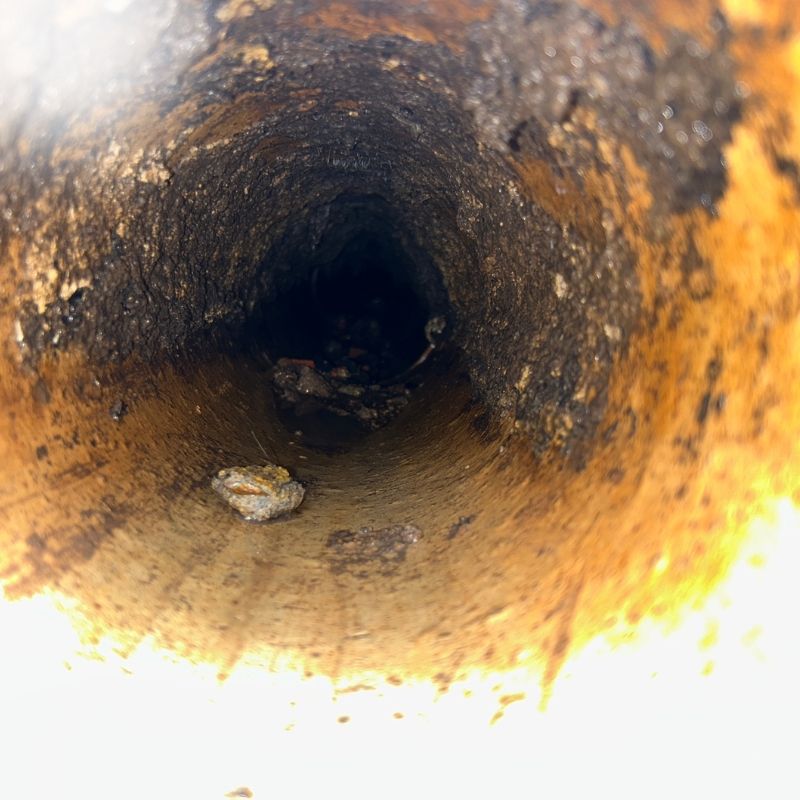
Sewer repairs are high-consequence: when the line fails, the impact is immediate and disruptive. The key to sewer pipe relining is not “can you reline?” but “is the host pipe suitable, and does the liner length cover the actual defect zone (including the weak joints around it)?” We use CCTV to locate damage, check deformation, identify junctions, and confirm access. That diagnostic step is what prevents relining from being used where excavation is the safer long-term fix.
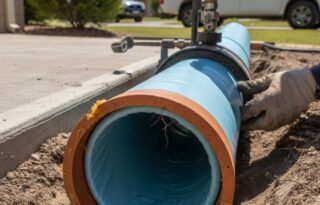
When relining is suitable, the job typically includes:
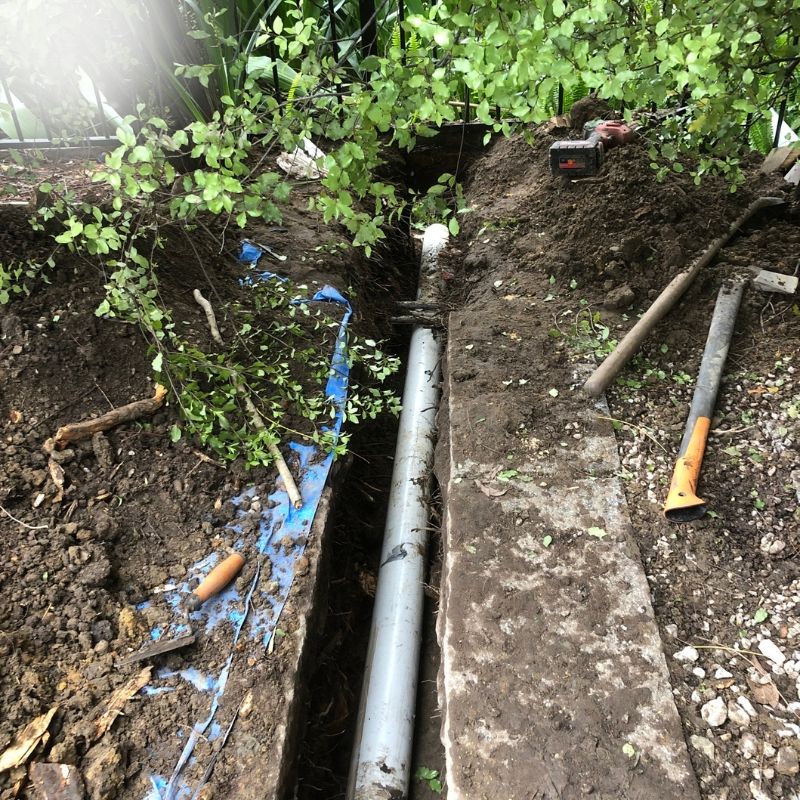
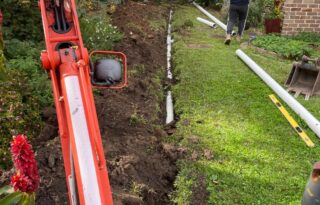
Relining is often chosen where digging would be high-impact (concrete, landscaping, tight access). It may not be suitable where there’s a major collapse, severe deformation, or the host pipe can’t support a liner. The decision comes down to what the camera shows, not the symptom list.
| Situation | Best Fit | Why | Next Step |
|---|---|---|---|
| Recurring blockages in the same line | Relining (if host pipe OK) | Fixes the underlying damage that traps debris | CCTV inspection + defined scope |
| Tree roots returning after cutting | Relining (often) | Seals intrusion points and reduces regrowth paths | Identify entry points + line length |
| Localised crack / joint leak | Targeted lining or repair | May be repairable without full replacement | Confirm the exact location on CCTV |
| Fully collapsed / severely deformed pipe | Excavation replacement | No viable host pipe for liner | Plan access + replacement |
| Unsure who owns the affected section | Diagnostic first | Avoids paying for the wrong section | Confirm boundary + line route |
We’re proud to be highly rated for fast response times, expert solutions, and friendly service. Read real reviews from satisfied plumbing customers.
Done properly, pipe relining services include more than installing a liner. The reliability comes from matching the method to the pipe condition, preparing the line so the liner bonds correctly, reinstating junctions so flow isn’t restricted, and verifying the result on CCTV. This is also where fixed pricing makes sense: the price is fixed to a defined scope that states exactly what’s included, what’s excluded, and what would trigger a change (for example: discovery of a fully collapsed section, inaccessible junctions, or unexpected line configuration).
A fixed scope commonly covers:
Most calls start with symptoms, but the long-term fix is about the cause:
If you’re repeatedly clearing the line, it’s worth comparing a clearing job with a permanent repair approach. See Blocked Drains for the difference between symptom relief and cause removal.
Tip 1: If you’ve had multiple “clear and go” visits, ask for the CCTV footage and the exact defect location—not just “there were roots”.
Tip 2: If damage is near a junction, the reinstatement method matters. A liner without correct junction reinstatement can create new restrictions.
ydney properties vary massively—older clay lines, cast, and newer PVC—and that changes how relining is assessed and installed. Local conditions that matter include access constraints (strata, tight side access, concrete), landscaping, and pipe routing that’s been altered over time. A good outcome depends on scoping the true defect zone (not just where water backs up) and choosing the least disruptive method that still achieves a durable, verifiable repair.
Apex Plumbing Services operates across Sydney, NSW—including Fairfield, Canada Bay, Blacktown, Sydney, Georges River, Inner West, Bayside, Willoughby, Canterbury-Bankstown, Cumberland, The Hills Shire, Strathfield, Woollahra, Waverley, Burwood, Parramatta, Randwick, Ryde, Hunters Hill, Lane Cove, and Mosman.
For coverage details and navigation by area:
If there’s overflow risk, we prioritise stabilising the situation first, then return to complete the permanent scope once the line can be properly inspected and prepared. For urgent attendance, start with an Emergency Plumber.
Not every “leak” looks like dripping water. In underground drainage, leaks often show up as persistent damp patches, foul odours, sinkholes, or repeated blockages from soil ingress. The critical step is confirming whether you’re dealing with a pressurised water line, a sewer/stormwater defect, or a boundary issue—because the right repair and urgency level changes completely.
We aim to confirm:
If symptoms are unclear, start with targeted diagnostics through Leak Detection so the repair isn’t based on assumptions.
Sewer relining is often chosen because it reduces disruption—but it still needs the same discipline as any major repair: correct diagnosis, correct scope, correct installation, and CCTV verification. Another practical issue is knowing where responsibility starts and ends. In many cases, you’re responsible for the private line up to the connection point, but the details vary by layout and configuration.
Assess overflow risk, set up containment if needed, and clear any immediate blockage concerns to prevent property damage.
Run a CCTV inspection to locate defects, identify junctions, and assess overall pipe condition and alignment.
Clean the line thoroughly and complete root cutting as required so the liner can bond properly to the host pipe.
Confirm the host pipe is suitable (condition, length, and access) and that the lining will achieve the intended outcome.
Install the liner to the required length, then allow it to cure so it forms a new pipe within the existing line.
Reinstate junctions as required, then complete post-lining CCTV verification and provide recommendations for ongoing maintenance or any follow-up works.
Choosing a pipe relining plumber is less about the word “relining” and more about the behaviours that prevent rework: inspection evidence, a defined scope, and verification. A plumber should be able to explain why relining is appropriate (or not), what length is being repaired, how junctions will be handled, and what might change once the line is prepared. In NSW, it’s also reasonable to verify licensing details before underground drainage work begins.
You should be able to see:
You’ve specified “Warranty Provided with Quote”. That means the warranty wording and conditions are written on the quote for the scoped work. Fixed pricing applies to the defined scope confirmed by inspection—if the inspection reveals collapse or access constraints that change the plan, options should be explained before additional work proceeds.
Apex Plumbing Services provides inspection-led pipe relining across Sydney with clear scoping and CCTV verification, backed by 26+ years in plumbing and drainage. You’re dealing with a NSW licensed plumber (306733C) and a team that focuses on diagnosing the cause before recommending the method. The practical benefit is fewer repeat call-outs and a repair plan explained in plain language—what’s included, what’s excluded, and what could change once the line is inspected.
If you’re seeing repeat blockages, odours, slow drains, or signs of an underground defect, the fastest way to confirm the right fix is an inspection-led scope. Tell us what you’re experiencing and where, and we’ll guide you through the next step.
Call 1300 096 668 or request a booking/quote via Contact Apex Plumbing Services.