
Backflow Prevention Sydney

Licensed plumbing backflow work is about keeping drinking water protected and meeting NSW requirements where a property is assessed as having a backflow risk. If you’ve received a notice, need a new device installed, or your tester report is overdue, Apex Plumbing Services can help with a clear scope, fixed pricing where appropriate, and fast turnaround across Sydney.

Backflow prevention in Sydney is not just “fit a valve” — it’s assessing the hazard, selecting the correct protection, installing to requirements, then testing and documenting results so the right parties can action them.

NSW Licensed Plumber (Licence No. 306733C)

26+ years in plumbing

20,000+ projects completed

122+ 5-star reviews

Fast turnaround with a large team

Warranty provided with the quote

Not for you if

  • You want paperwork without proper testing and verification
  • You need someone to ignore a failed device to “get it signed off”
  • You’re after DIY guidance for cross-connections (high-risk and compliance-sensitive)

Call 1300 096 668 or Book Backflow Testing

Read More

Plumbers You Can Rely On

Read what customers say in 123 Google reviews.

Contact Us Today

Get a Quote

WE ARE OPEN NOW

April 4, 2026 12:30 pm
Drag & Drop Files, Choose Files to Upload You can upload up to 5 files.
File Upload
apex-red-image
1 +
Years of
Experience

Trusted & Recommended By:

apex-red-image
26 +
Years of
Experience

Trusted & Recommended By:

Backflow In Plumbing

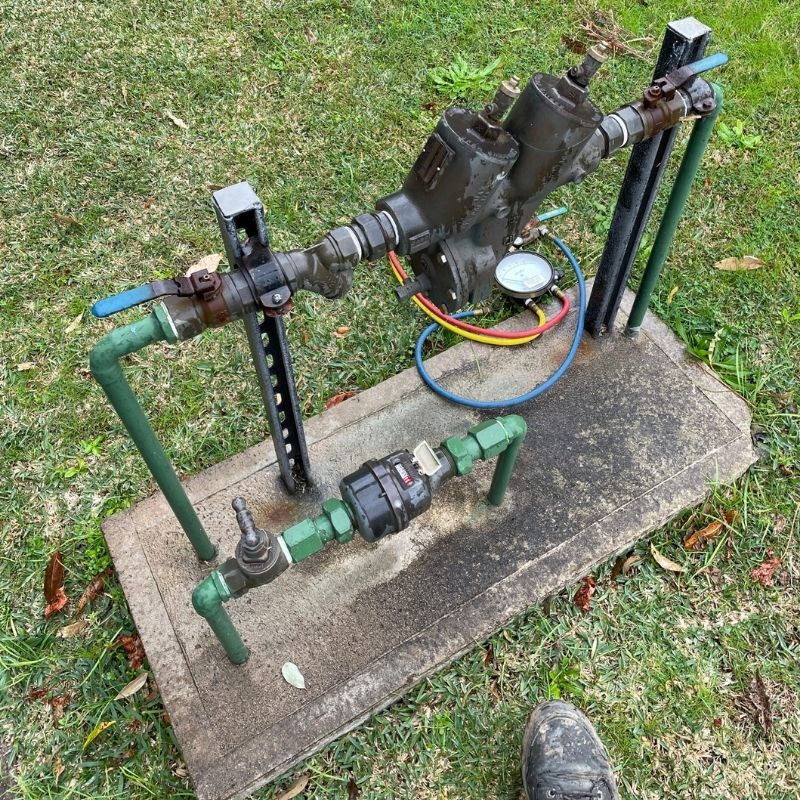
Technician servicing a backflow prevention device beside a water meter in garden
Top rated Company
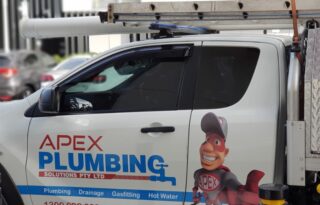
A branded Apex Plumbing service ute parked on a city street, clearly showing a professional Plumber Sydney vehicle with ladder rack.

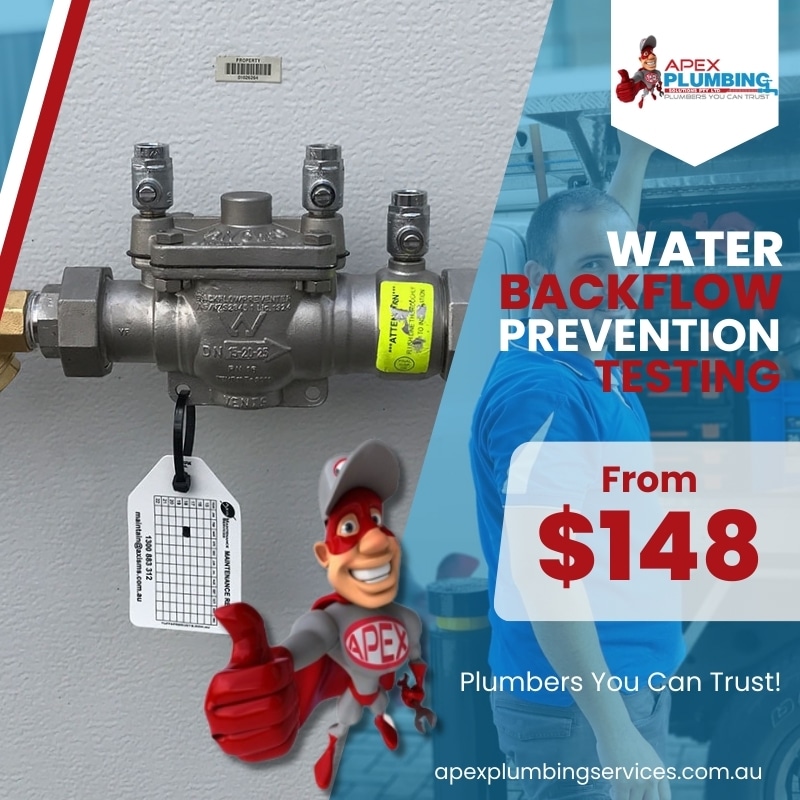
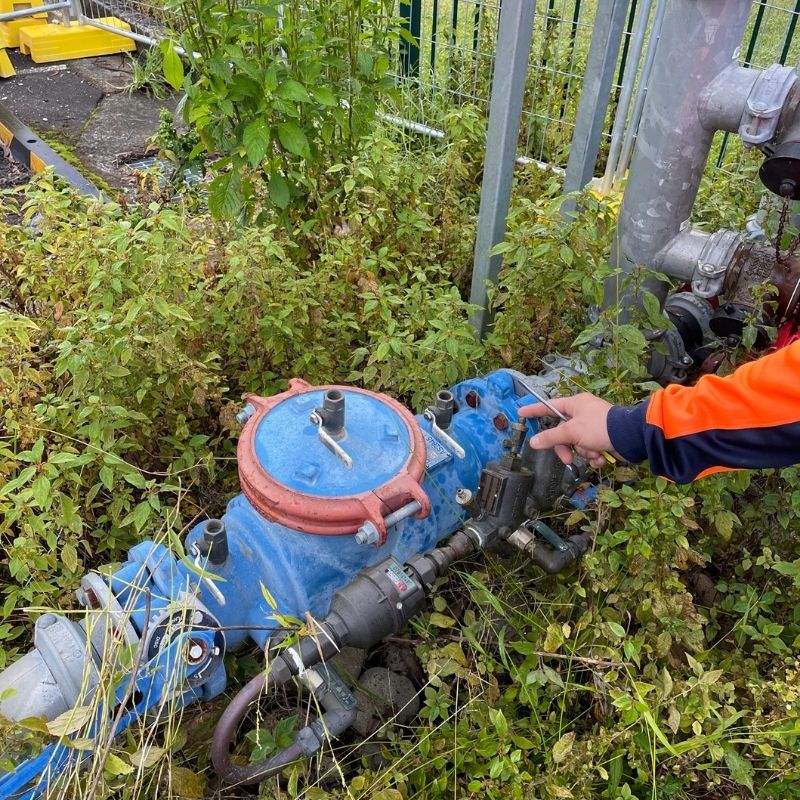
Backflow happens when water flows the wrong way through a plumbing system, potentially drawing contaminants back into drinking water lines (through backsiphonage or backpressure). The right fix depends on the hazard rating, how the site is used, and what devices are suitable for the risk level. A proper approach is evidence-led: assess, select, install, test, and document — so the outcome is both safe and practical.

Cross Connection Risk Points That Trigger Requirements

Backflow jobs are often driven by specific connection points where contamination could be introduced. Typical triggers (depending on the property) include:

  • irrigation and garden systems connected to potable lines
  • commercial kitchens and food prep areas
  • medical, dental, and healthcare fit-outs
  • car washes and workshops
  • fire services and hydrant connections
  • rainwater tank cross-connection risks
  • cooling tower and plant rooms

If you’re unsure what triggered the requirement, the fastest path is a site check that identifies the relevant connections and confirms what’s actually needed.

What A Backflow Visit Covers From Test Gear to Paperwork

Backflow work is usually a mix of assessment, practical plumbing work, and documentation. Depending on what’s required on site, this may involve:

  • confirming the backflow risk points and existing protections
  • checking device condition, valves, and access
  • repairs or replacement where parts have failed, or devices can’t pass the test
  • installing an appropriate device where none exists
  • testing and recording results in a format suitable for compliance action
  • explaining what needs to happen next and why

Warranty provided with the quote applies to the work completed and the agreed scope.

Technician servicing a backflow prevention device beside a water meter in garden
A branded Apex Plumbing service ute with ladder rack and signage parked on a street, representing a professional Plumber Sydney service.

Compliance Pathways at a Glance

SituationBest FitWhyNext Step
You’ve received a backflow noticeon-site assessment + testing planConfirms what devices exist and what’s requiredBook a compliance visit
Existing device fails a testrepair or replace + retestFailed protection is treated as an active riskApprove repair scope
New fit-out or change of usehazard assessment + device selectionRisk rating can change with usageArrange installation
Irrigation connected to potable waterappropriate device + testIrrigation is a common cross-connection riskInstall and document
Strata or facilities management needs schedulingplanned servicing cycleReduces missed deadlines and repeat calloutsSet a service reminder

Backflow Prevention Reviews

We’re proud to be highly rated for fast response times, expert solutions, and friendly service. Read real reviews from satisfied plumbing customers.

Really solid experience with Apex Plumbing. The staff on the phone were a pleasure to talk to, and the plumbers came out pretty quickly, which I appreciated.

They explained everything clearly, got the job done without any fuss, and cleaned up after themselves. You can tell they know what they’re doing.

You definitely get the amazing service you pay for. Would use them again.
Response from the owner:Thanks for the review — really appreciate it. Great to hear the team delivered fast, clear and quality service. We’ll be here anytime you need us 👍
I had a very tricky job involving a water tank and the people at Apex did an excellent job of finding out the cause and solving the problem. It was a three-man job in the end! I would recommend Apex to anyone.
Response from the owner:Hi John, Thank you for your kind feedback. That was a complex issue, and we’re pleased our team could diagnose and resolve it to a high standard. We appreciate your recommendation and the trust you placed in Apex. – Apex Plumbing
Great experience with Apex! Friendly staffs, good communication and professional service. I am very happy with my new Rinnai hot water heater. Thanks Suzie, George and Oscar. Highly recommend.
Response from the owner:Thank you for your kind review! We’re so glad you’re happy with your new Rinnai hot water system. I’ll pass your feedback on to Suzie, George, and Oscar—they’ll really appreciate it. We’re always here if you need anything!
Oscar was referred by a trusted trade, he was quick to respond, fitted me in this week for gas work, and turned up on time after a message he was on the way. He’s a friendly guy and a pleasure to have around your home. Very fair rates too for great work done. You’ll be on here reviewing him too!
⭐️⭐️⭐️⭐️⭐️
Response from the owner:Thank you so much for the kind review! It was a pleasure helping you out with the gas work. I’m really glad we could get it sorted quickly and that you were happy with the service. I always try to keep things easy, reliable, and fairly priced, so your feedback means a lot. Don’t hesitate to reach out if you ever need a hand again.
Friendly owner and staff! Very transparent and try their best to accommodate your schedule. I’ve had a couple of jobs done by Oscar and his crew and they get the work done pretty quickly! Happy to call them again if we need any work done. 5 🌟
Response from the owner:Thank you so much for the kind words! 😊 We truly appreciate your support and are glad to hear you’ve had a great experience with Oscar and the crew. We always aim to be transparent and do our best to accommodate everyone’s schedule, so it means a lot that you noticed. It’s been a pleasure working with you, and we’d be more than happy to help again whenever you need. Thanks again for the 5 stars! ⭐⭐⭐⭐⭐

The Problems Backflow Prevention Solves and What To Watch For

Backflow in plumbing happens when water flows the wrong way and draws contaminants back into the potable supply. It can be triggered by back-siphonage (pressure drop in the mains) or back-pressure (higher pressure inside a property pushing back). The practical risk is simple: if the wrong line connects to the drinking supply and pressure conditions change, contamination becomes possible.

Common scenarios we see across homes and commercial sites include:

Irrigation systems and garden taps with cross-connection risk

Commercial kitchens, cafés, and food prep areas

Gyms, medical sites, and facilities with specialised equipment

Strata buildings with shared services and multiple tenants

Alternative water supplies (where applicable) and mixed-use plumbing setups

Two insider checks that prevent repeat failures

If a device “keeps failing”, don’t assume it’s always the valve internals. Pressure instability, incorrect installation orientation, or poor access that leads to incomplete testing can be the real cause.

Don’t treat every property as high hazard. Over-specifying a device can increase costs and ongoing maintenance without improving safety. The goal is the right protection for the actual risk level.

If you’re also dealing with unexplained water loss or damp areas while tackling compliance, hidden leaks can complicate testing results and pressure readings. In those cases, can be the fastest way to stabilise the system before re-testing. leak detection for hidden water issues

For older or damaged lines where contamination risk is tied to pipe condition, pipe relining for damaged lines can sometimes solve underlying defects without major excavation.

How We Handle Testing Servicing and Installation

The correct fix depends on what’s installed, how it’s installed, and what the site is being used for. We keep the process structured so you’re not paying for multiple visits or unclear outcomes.

1. Confirm device type and access

We locate the device, confirm accessibility, check visible install condition, and identify any obvious issues that affect testing quality.

2. Complete backflow prevention testing

We test in line with device requirements and record results clearly. If a device fails, we identify why (not just “fail”).

3. Explain the result and options

You’ll get a straightforward plan: service/repair (where suitable) or replacement if the device is beyond economical repair or not fit for purpose.

4. Quote fixed pricing before work starts

We provide a fixed quote on site so you can approve the work with clarity.

5. Complete repairs or installation and re-test

Once work is complete, we confirm performance and leave you with the information you need for your records.

Backflow Plumbing

A backflow plumber needs to do more than turn up with test gear. The critical part is understanding the site’s hazard points and selecting the right device for the level of risk, then installing and testing it in a way that supports compliance. Sydney Water guidance outlines how backflow prevention obligations rely on correct assessment, installation, and testing. (sydneywater.com.au)

How We Confirm Device Type, Location and Hazard Rating

Backflow issues are often made more expensive when people jump straight to “replace the device” without confirming why it was required, what hazard rating applies, and whether the device is the correct type for the application.

We typically work through:

  • what the notice says and which connection(s) it relates to
  • what devices are present, and whether access is suitable
  • whether the site uses low, medium, or high hazard considerations
  • whether the device type and location are appropriate for the risk
  • what’s needed to restore compliance if a device fails

If you also suspect hidden leaks or unexplained pressure behaviour, we can coordinate related diagnostics via Leak Detection when it’s relevant to the decision.

The Failure Patterns We See Most Often

A few patterns tend to create repeat problems:

  • installing a device type that doesn’t match the hazard rating
  • poor access (making proper testing or servicing difficult)
  • isolating valves that don’t hold pressure reliably
  • device is positioned where debris or flooding affects performance
  • leaving cross-connection points unaddressed (so the risk remains)

When To Escalate a Suspected Contamination Risk

If there’s a chance of contamination (for example, a suspect cross-connection or device failure at a high-risk point), treat it as urgent. Stop using affected outlets where practical and organise immediate attendance. For urgent plumbing support, see Emergency Plumber.

Water Backflow Prevention

Water backflow prevention is essentially “connection control” — stopping any non-potable source from reversing into drinking water plumbing. The right outcome is measurable: the device performs as intended under test conditions, and the site’s risk points are controlled in a way that makes sense for how the property is used.

What A Passing Result Means In Practical Terms

A solid outcome usually means:

  • the correct device type for the risk level
  • installation that supports safe access and reliable isolation
  • test results recorded clearly, with failures handled properly
  • the system is verified, so it protects the potable supply, not just a single fixture
  • practical advice on how to avoid reintroducing cross-connections later

NSW advisory notes on cross-connection and backflow control link requirements to prevent contamination risk within plumbing compliance frameworks. (nsw.gov.au)

Residential Versus Commercial Expectations

  • Residential: commonly focuses on specific risk points like irrigation, rainwater connections, and hose taps near hazards.
  • Commercial/industrial: often involves higher-risk points and structured compliance schedules, particularly where the site interfaces with broader supply obligations.

Backflow Prevention Sydney

If you’re searching locally, it’s usually for one of three reasons: a notice, an overdue test, or a device that has failed. The goal is quick attendance, correct testing, and a clear next step if the device doesn’t pass.

Sydney Coverage for Backflow Work

Apex Plumbing Services supports Sydney-wide work, including: Fairfield, Canada Bay, Blacktown, Sydney City, Georges River, Inner West, Bayside, Willoughby, Canterbury-Bankstown, Cumberland, The Hills Shire, Strathfield, Woollahra, Waverley, Burwood, Parramatta, Randwick, Ryde, Hunters Hill, Lane Cove, and Mosman.

For site managers, the practical win is having one provider who can test and, if needed, complete repairs promptly — rather than splitting responsibility across multiple trades.

Backflow Device Installation

Device installation is not “one device fits all”. The type and placement should follow the hazard assessment and the requirements for that application. The aim is to install a device that can be tested, serviced, and relied on — rather than creating a hard-to-access liability.

Choosing the Right Protection Without Guesswork

Selection generally depends on:

  • how the water connection is used (irrigation, process, wash-down, plant, fire services)
  • whether there’s potential for backpressure and/or backsiphonage
  • whether the hazard is low, medium, or high (based on what could enter the line)

AS/NZS 3500 is commonly referenced for plumbing and drainage work and informs how systems are designed and installed. (standards.org.au)

Installation Details That Make Testing Easier Later

Small installation choices can drive long-term issues. We prioritise:

  • sensible placement for safe access and routine testing
  • reliable isolating valves and clear identification
  • minimising exposure to debris, flooding, or impact where practical
  • leaving you with clear information on what was installed and why

If the best long-term outcome requires additional plumbing adjustments (for example, to remove an ongoing cross-connection risk), that’s explained before work begins so you can decide.

Backflow Prevention Servicing

Servicing is how you avoid last-minute failures and urgent callouts when a test is overdue. The goal is to keep devices functional, accessible, and ready to pass testing within the normal schedule for your site’s requirements.

Keeping Devices Ready for the Next Test Cycle

Servicing may include:

  • checking valves, access, and signs of wear
  • addressing leaks and pressure irregularities around the device
  • identifying early failure signs (so repairs can be planned)
  • helping you maintain a simple servicing record for the site

For facilities and strata, a basic schedule and reminder system reduces missed deadlines and repeated emergency work.

Questions Worth Asking Before You Book

  • What device type is installed, and why is it suitable for this site?
  • What will you do if the device fails testing?
  • Is your scope fixed, and what would change it?
  • Will you confirm access, isolation, and safe placement as part of the work?
  • What documentation will you provide, and who should receive it?
  • What warranty applies to the work quoted?
  • Can you complete repairs promptly if the device doesn’t pass?

Sydney Water Backflow Prevention

Many Sydney backflow jobs are driven by water authority requirements and compliance expectations for managing cross-connections. Sydney Water provides guidance to plumbers on backflow prevention obligations, including assessing, installing, and testing devices. (sydneywater.com.au) NSW guidance also outlines cross-connection and backflow control considerations under plumbing compliance frameworks. (nsw.gov.au)

Staying Compliant Without Overpaying

The most cost-effective approach is usually:

  • confirm exactly what the requirement is (and for which connection)
  • match the device and placement to the risk level
  • test properly and act quickly on failures
  • keep a simple record so the next cycle isn’t a scramble

Support Planning Tools and References

Why Choose Apex Plumbing Services

Backflow work is a mix of plumbing, risk judgement, and documentation — and the best outcome is one that’s safe, testable, and clear on what happens next. Apex Plumbing Services is NSW licensed (306733C), has 26+ years in the trade, and supports Sydney-wide sites with a large team for fast turnaround.

  • Fixed pricing approach where appropriate, with scope confirmed before work
  • Fast follow-up for repairs and retests when devices fail
  • Clear communication for site managers and owners
  • 20,000+ projects completed
  • 122+ 5-star reviews you can verify
  • Real job examples available

You can review customer feedback on Reviews.

24/7 Service Availability
Customer Reviews & Ratings
Licensed & Experienced Team
Reputation & Online Presence

Backflow Prevention FAQs

What is backflow prevention?

Backflow prevention is a method of stopping contaminated water from flowing back into drinking water plumbing. It usually involves identifying cross-connection risks and installing a suitable device that can be tested and maintained. The aim is protecting potable supply, not just improving water pressure or flow.

Why Would I Receive a Backflow Notice?

A notice is usually triggered by a risk assessment linked to how the property is used or what it’s connected to (irrigation, commercial plant, fire services, or other hazards). The requirement is typically about controlling contamination risk and keeping a documented testing cycle, especially where the site interfaces with broader supply obligations.

Do You Provide Backflow Testing in Sydney?

Yes. We provide backflow prevention testing across Sydney and can also handle follow-up work if a device fails. The focus is on verifying device performance, documenting results clearly, and explaining what to do next so you can action compliance requirements without guesswork.

What Happens If a Device Fails the Test?

If a device fails, it means protection can’t be confirmed, and the risk remains. The next step is usually repair or replacement, followed by retesting. We’ll explain what failed, what options make sense, and what the fixed scope would be before proceeding.

Can You Install a New Backflow Device?

Yes. Installation starts with confirming what your site requires, selecting the right device type for the risk, and then installing it with proper access and isolation. We then test and document results so the device is both functional and suitable for the intended compliance outcome.

Is Backflow Prevention Only for Commercial Properties?

No. Residential properties can have backflow risks too, especially with irrigation, rainwater connections, hose taps near hazards, or changes made during renovations. The difference is usually the complexity and how formal the compliance cycle is, not whether the risk exists.

How Much Does Backflow Prevention Cost?

Cost depends on whether you need testing only, repairs, or a new device installed. Pricing is fixed where appropriate and confirmed based on the scope. If there are variables (access issues, device condition, additional plumbing changes), we explain what’s included before starting.

How Long Does Backflow Testing Take?

Most on-site testing is relatively quick once access is available, but timing can vary depending on the device type, site conditions, and whether isolation valves or access need attention. If a retest is required after repair or replacement, we’ll outline the likely timing during the visit.

Do You Offer 24-Hour Emergency Services for Backflow Issues?

Yes. If you believe there is an active contamination risk, a severe leak around a device, or a critical supply issue, urgent attendance may be appropriate. We’ll help you reduce risk immediately and advise the quickest safe next step based on what you’re seeing on site.

What Information Should I Have Ready Before Booking?

If you have a notice, have it available along with the site address and any details about where the device is located. If you’ve had previous test reports or know the device type, that helps, but it’s not required. We can confirm details during the assessment.

Do You Work With Strata and Facilities Managers?

Yes. We regularly support strata and facilities sites where scheduling, access coordination, and consistent documentation matter. The aim is to reduce missed deadlines and ensure any repairs are handled quickly so the site stays on track with its testing cycle.

Are You Licensed for Plumbing Work in NSW?

Yes. Apex Plumbing Services operates as a licensed plumbing provider in NSW (Licence No. 306733C). NSW sets licensing requirements for plumbing, draining, and gasfitting work.

Do You Provide a Warranty?

Warranty provided with the quote applies to the work completed and the agreed scope. Where outcomes depend on existing site conditions (for example, old valves, access constraints, or broader plumbing issues), we’ll make those dependencies clear in the quote so expectations are set upfront.

Book Backflow Prevention Testing

If you’ve received a notice, need backflow testing, or want a practical plan to stay compliant across your site, call 1300 096 668 or Contact Apex Plumbing Services to book.

Let us help you get your project started.

Contact us
CALL NOW 1300 096 668